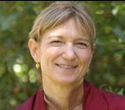
Dana DePalma has practiced Insight Meditation since 1993 and is a member of the Spirit Rock Teachers Council. Dana co-developed and leads innovative programs for the staff at Spirit Rock that combine practice, study and leadership training. She holds a Masters Degree in Counseling Psychology, is a licensed Marriage and Family Therapist, and enjoys sharing the Dharma as a spiritual mentor.
DaRa Williams is a trainer, meditation teacher and psychotherapist. DaRa has been a meditator for the past 25 years and is a practitioner of both Vipassana and Ascension meditation. She is a graduate of the Spirit Rock/Insight Meditation Society Teacher Training Program and is a Guiding Teacher at IMS. She is the Program Manager and a core teacher in the current IMS Teacher Training. DaRa has been a clinician and administrator in the field of Mental Health for over 25 years and currently maintains a private practice in Manhattan. She is a certified trainer and practitioner of Indigenous Focusing-Oriented Therapy and Complex Trauma. DaRa integrates these skills, understandings, wisdom traditions and worldviews in her intention for contributing to the ending of suffering for all beings.
"It is my belief that vipassana meditation and the dharma are ideal for transforming suffering, particularly the trauma of oppression and its many vicissitudes-where the chains around our minds and hearts can be broken and dissolved. Awareness and wisdom become the vehicle for freedom and transforming lives."
David R. Loy is especially interested in the conversation between Buddhism and modernity. His books include A New Buddhist Path, Ecodharma: Buddhist teachings for the Ecological Crisis, Nonduality, Lack and Transcendance, A Buddhist History of the West, The Great Awakening, Money Sex War Karma and The World Is Made of Stories. A Zen practitioner for many years, he is qualified as a teacher in the Sanbo Zen tradition.
Dawn has been practicing and studying Insight Meditation since 2005, and has graduated from the first teacher development group of True North Insight, and Spirit Rock's Mindfulness Yoga and Meditation Training, Dedicated Practitioners' Program, and 4-year Retreat Teacher Training. She teaches with a playful, dynamic, and heartfelt approach, and leads daylongs, retreats, yearlong programs, and mindfulness workshops in Canada and the US for Spirit Rock, True North Insight, and for teens with Inward Bound Mindfulness Education. Dawn is also the author of “Mindfulness Meditation for Beginners”. For more information, visit dawnmauricio.com.
Dawn Neal started practicing in 2004, and has cumulatively devoted several years to silent retreat. In 2010, her Burmese teacher asked her to teach through the lens of metta. She serves as the Guiding Teacher for Insight Santa Cruz, and as faculty for the Sati Center for Buddhist Studies Online Buddhist Chaplaincy Training. She offers both residential and online retreats.
She completed Dharma teacher training with Gil Fronsdal and Andrea Fella in 2025. Before teaching full time, Dawn was a professional Interfaith Chaplain at Stanford Medicine. Her writing appears in Buddhist Studies journals and Refuge in the Storm, an anthology. Dawn loves supporting practitioners to deepen and broaden their wisdom, meditative stability, and integration. She offers teachings to support greater love, liberation, and peace in our hearts and the world. Dawn remains a dedicated student and practitioner of the Dharma.
Dawn Scott has been practicing insight meditation since 2008, is a Diamond Heart practitioner, and currently serves as the Family Program Coordinator at Spirit Rock Meditation Center. She teaches teen retreats at Inward Bound Mindfulness Education (iBme) and is a participant in the 2017-2021 IMS Teacher Training Program.
Deborah Ratner Helzer has practiced with Western and Asian teachers in the Theravada tradition since 1995, including a year as a nun in Burma. She has been teaching in the Washington, DC area and assisting with retreats around the country since 2001.
Debra Chamberlin-Taylor is a teacher at Spirit Rock Meditation Center. She has been meditating since 1973 and has led retreats that combine spiritual and psychological growth since 1978. In addition to practicing Vipassana, she has been influenced by Dzogchen, Diamond Heart, and devotional practices. More recently she has become a certified teacher of Wisdom Healing Qigong, finding Qigong and mindfulness used together to be the most healing and transformative practice in her long spiritual journey. A psychotherapist, she also leads workshops on embodiment of awareness and love in relationships and in our diverse world.
Devin (he/him) has been practicing Insight meditation since 1999. He regularly teaches at the Insight Meditation Society (IMS). Devin has undertaken many periods of silent long-term retreat practice. He was a community teacher at East Bay Meditation center in Oakland, CA where he co-founded both the teen and men of color sangha. Devin recently relocated to Western Massachusetts from the San Francisco Bay area. He is deeply committed to the personal and collective liberation of marginalized communities knowing that through the integration of reflection and insight, clarity and wisdom give rise to wise action.
devon hase has practiced intensively in the insight and vajrayana traditions since discovering meditation in 2000. After a decade of bringing mindfulness to high school and college classrooms, she entered several years of silent, solitary retreat in the mountains of Oregon. She now teaches at the Insight Meditation Society, Spirit Rock Meditation Center, and the Forest Refuge, and serves as co-guiding teacher of the online dharma community Refuge of Belonging. Devon supports practitioners in both long and short retreats, as well as through personal mentoring, with an emphasis on relational practice and connection to the natural world. Along with her life partner, nico, she co-authored How Not to Be a Hot Mess and the forthcoming This Messy, Gorgeous Love: A Buddhist Guide to Lasting Partnership (2026). Learn more at devonandnicohase.com.
My work since 2006 through UCLA’s Mindful Awareness Research Center (uclahealth.org/marc) emphasizes making mindfulness teachings accessible to all, regardless of background, yet without losing depth practice. In recent years I have been teaching on Natural Awareness— the effortless, objectless, and spacious side of awareness practices. Socially engaged Buddhism is a thread woven through many of my talks-- how can we end suffering both internally and externally? Having worked with teens and young adults for many years, some of the talks are geared to young people. Finally as a mom of a tween, I'm deeply inspired by the transformative power of daily life and family practice.
1. Choose one meditation practice and stick with it. If you want to progress in meditation stay with one technique.
2. Meditate every day. Practice now. Don't think you will do more later.
3. Any situation is workable. Each of us has enormous power. It can be used to help ourselves and help others.
4. Practice patience. Patience is one of the most important virtues for developing mindfulness and concentration.
5. Free your mind. Your mind is all stories.
6. Cool the fire of emotions. Anger is a fire.
7. Have fun along the way. I am quite happy. If you come to meditate you will also be happy.
8. Simplify. Live simply. A very simple life is good for every thing. Too much luxury is a hindrance to practice.
9. Cultivate the spirit of blessing. If you bless those around you this will inspire you to be attentive in every moment.
10. It's a circular journey. Meditation integrates the whole person
Donald Rothberg, PhD, has practiced Insight Meditation since 1976, and has also received training in Tibetan Dzogchen and Mahamudra practice and the Hakomi approach to body-based psychotherapy. Formerly on the faculties of the University of Kentucky, Kenyon College, and Saybrook Graduate School, he currently writes and teaches classes, groups and retreats on meditation, daily life practice, spirituality and psychology, and socially engaged Buddhism. An organizer, teacher, and former board member for the Buddhist Peace Fellowship, Donald has helped to guide three six-month to two-year training programs in socially engaged spirituality through Buddhist Peace Fellowship (the BASE Program), Saybrook (the Socially Engaged Spirituality Program), and Spirit Rock (the Path of Engagement Program). He is the author of
The Engaged Spiritual Life: A Buddhist Approach to Transforming Ourselves and the World
and the co-editor of Ken Wilber in
Dialogue: Conversations with Leading Transpersonal Thinkers.
Doug is founder and guiding teacher of Empty Sky Vipasssa Sangha and a long time practioner of vipassana and zen. His teaching is strongly influenced by Vimala Thakar and J. Krishnamurti as he explores such questions as "After all these years of practice, why are we not free?" and "What happens that we do not immediately live the understanding we work so hard to gain, continuing to cling to the false when seeing clearly what is true?" He brings a strong committment and interest to the integration of formal practice and intimacy in relationship in the context of daily living.
Eric Kolvig, Ph.D., taught meditation for 30 years in the vipassana tradition. He led meditation retreats and gave public talks around the United States and abroad. Eric has a particular interest in “grassroots dharma,” building spiritual community in democratic, non-authoritarian ways. He co-founded wilderness retreats and also Lesbian, Gay, Bisexual, Transgender, Queer, Questioning and Intersex (LGBTQI) retreats in the vipassana tradition. Now retired, Eric lives in Flagstaff.
Erin Selover offers insight meditation retreats nationally. She also has a part-time psychotherapy practice and teaches leaders, activists, at-risk youth and women in prison to use mindfulness and values-based living to increase well-being and the greater good.
Erin is Guiding Teacher at Vallecitos Mountain Retreat Center in northern New Mexico and Resident Teacher at the Durango Dharma Center. Her approach to sharing the dharma is influenced by her love of wild nature, her ongoing experience as a student of the Diamond Approach by A.H. Almaas and by her decades of working with somatics and as a bodyworker.
I am intrigued by how we can live the 'holy life' as lay people. How do we erase the imaginary line between formal sitting practice and the rest of our lives? How can we bring full engagement to formal and informal practice? Is it possible to embody, in our lives, the understanding and insight that comes with intensive training? And can we live our lives in a way that expresses and continues to deepen our realization? These questions fuel my practice and my teaching.
I place a lot of emphasis on the Buddha's teaching about mindfulness of the body. The body is a powerful dharma gate. I encourage people to deeply investigate the body and use it as a place of recollection in daily life.
Our individual and cultural habits, our confusion, all require a sincere and ongoing commitment to spiritual life and practice. In order to mature our 'layastic' practice, we need to develop a palette of practices: mindfulness, loving-kindness, inquiry, reflection, precept practice, service, sutta study, etc.
I believe passionate engagement is the foundation of the spiritual path. Spiritual life blossoms when mindfulness is woven with a heartfelt sense of loving-kindness and compassion. With warm mindfulness as the basis of practice, our attachment to identity, roles and experience begins to loosen. As our experience and understanding matures, faith develops. This nourishes a devotion to practice which further deepens our insights.
It is precious to be born in the human realm and have an opportunity to practice and awaken. May we appreciate our inheritance and bring to life the teachings of the Buddha.
Fiona Nuttall, Zhijing Fahong, is the first Dharma Heir of Simon Child. Fiona trained with John Crook and Simon Child from the 1990's. She has been leading retreats for WCF since 2007.
Francisco started to meditate in 2003, following a life-changing accident. Meditation has helped him realize unexpected recovery and adapt to being disabled. He was born and raised in the Dominican Republic, immigrating to the United States at the age of ten. Prior to his injury, he worked in the technology sector in San Francisco as a senior director. Francisco is a classically trained Dharma Teacher, authorized by the Insight Meditation Center. Early Buddhist texts and canonical Theravada Buddhism inform his teaching. His teaching also draws upon resolution of his post-injury PTSD, as well as his study and engagement in the arts. Francisco is devoted to teaching Spanish speakers worldwide and supporting underserved communities (bipoc, disabled, and lgbtq+).
In 1987 Frank co-founded the Zen Hospice Project, the first Buddhist hospice in America. In 2004, he created the Metta Institute to provide broad based education on mindful and compassionate end of life care. He is a frequent keynote speaker for many healthcare organizations such as Harvard Medical School, the Mayo Clinic, the National Hospice and Palliative Care Organization and others. He teaches at dharma centers around the world including the Spirit Rock Meditation Center, the Upaya Zen Center, and Rigpa's international centers and many more.
Fred von Allmen has studied and practiced under Tibetan and Theravada teachers since 1970 in Asia, Europe and the US. He has taught retreats worldwide for 25 years. The author of several Buddhist books in German, he is a co-founder of the Meditation Center Beatenberg in the Swiss Alps.