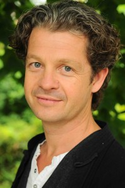
Martin points out the 3 different kinds of stimulation (vedana) and explores skilful ways of exploring and responding to pleasant, unpleasant, and neutral experience. Emphasis is given to somatic practice, recognizing the physical contractions that form around the 3 types.
Grounding meditation in bodily experience. Activating qualities of awareness through the posture: Grounded - steady, upright - bright, open - receptive, relaxed - gentle.
Meditation practice is a way of directly and intimately exploring life in the laboratory of our own hearts and minds. In cultivating and deepening our practice, we learn about our inner compulsions and contractions, learning to soften and release them.
Simultaneously though, meditation also reveals to us the nature of reality, the way life is, how experience forms and impacts on consciousness. This evening and day with Martin Aylward will focus on some of the more difficult aspects of Buddhist teaching, offering ways to make these profound subjects accessible and even obvious.
Martin will lead us experientially into teachings on ‘emptiness’, ’suchness’ and the fluid, ephemeral nature of experience, pointing us towards an immediate and intimate understanding of these deep and important themes. We will learn together how to approach the deep nature of experience, and how the contemplation of these themes transforms us, bringing together the personal and impersonal aspects of Buddhist practice.
Meditation practice is a way of directly and intimately exploring life in the laboratory of our own hearts and minds. In cultivating and deepening our practice, we learn about our inner compulsions and contractions, learning to soften and release them.
Simultaneously though, meditation also reveals to us the nature of reality, the way life is, how experience forms and impacts on consciousness. This evening and day with Martin Aylward will focus on some of the more difficult aspects of Buddhist teaching, offering ways to make these profound subjects accessible and even obvious.
Martin will lead us experientially into teachings on ‘emptiness’, ’suchness’ and the fluid, ephemeral nature of experience, pointing us towards an immediate and intimate understanding of these deep and important themes. We will learn together how to approach the deep nature of experience, and how the contemplation of these themes transforms us, bringing together the personal and impersonal aspects of Buddhist practice.
Meditation practice is a way of directly and intimately exploring life in the laboratory of our own hearts and minds. In cultivating and deepening our practice, we learn about our inner compulsions and contractions, learning to soften and release them.
Simultaneously though, meditation also reveals to us the nature of reality, the way life is, how experience forms and impacts on consciousness. This evening and day with Martin Aylward will focus on some of the more difficult aspects of Buddhist teaching, offering ways to make these profound subjects accessible and even obvious.
Martin will lead us experientially into teachings on ‘emptiness’, ’suchness’ and the fluid, ephemeral nature of experience, pointing us towards an immediate and intimate understanding of these deep and important themes. We will learn together how to approach the deep nature of experience, and how the contemplation of these themes transforms us, bringing together the personal and impersonal aspects of Buddhist practice.
In this final talk of the series, Martin looks at the social implications of widening our sense of identification, including not only the world but also other human beings within the field of our experience. The talk explores the suffering born of the us and them mentality and points to how the need to awaken together and take all beings into our heart.
In this talk Martin looks at the tendency to conceive in terms of objects rather than process, unpicking the way we maintain and reinforce the ego structure, and offering a vision of a more expansive and inclusive participation in life.
Continuing from the previous talk, Martin looks at the ways we imagine, maintain and reinforce our psychological sense of self. The talk explores how we live in images and descriptions of who we think we are, layered by our constant critical self evaluation, and points us beyond our psychology to a fuller and freer embodying of our life.
We are bound by our biology, and our health, longevity and death are largely out of our control. This talk explores the way our biology impacts us, including the influences of the sex drive, the survival drive and the social drive. Martin looks at how we can explore and understand our biology in such a way as to inhabit it freely.
In this talk Martin looks at the tendency to conceive in terms of objects rather than process, unpicking the way we maintain and reinforce the ego structure, and offering a vision of a more expansive and inclusive participation in life.
Martin uses this talk to examine the Buddhas description of Dharma practice as Going against the stream of Greed, Hatred and Delusion. He traces these forces in our contemporary lives in their personal, social and global dimensions, inviting us to reflect on how to make an appropriate response to the life in which we find ourselves.
This talk questions our willingness to really be in contact with our experience. Martin explores our tendency to divide ourselves from life, from others and from our own experience, and points the way back to an undivided, undefended existence. The talk also reflects on the natural boundlessness of heart that opens up as a liberated response to different types of experience.
Martin explores different personality styles of resistance and rejection, the ways anger functions and the importance of letting ourselves feel negative emotions as a way of freeing them up and letting go of our personal hard luck story. He also explores the way practice can transform anger into fearlessness as an important force against injustice, oppression and inequality.
On this summer solstice evening out under the trees at Gaia House, Martin reflects on the importance of trees in the Buddhas life, the disingenuousness of the term mindfulness and what it means to be embodied.
Here, Martin looks at the dichotomy we easily make between the retreat situation and the rest of life, and explores the skilful integration of our practice, as well as looking at some of the forces that tend to shape our into our personal, relational and cultural lives.
Using the zen image of first there is a mountain, then there is no mountain, then there is, Martin charts the evolution of relating to form and emptiness, exploring the fundamental duality of conventional experience, and the natural pull towards its dismantling, transcendance and integration.
This talk explores bringing the fundamental truth of lifes fluidity, and the familiarity of teachings on impermanence, right into the heart of every-moment practice.