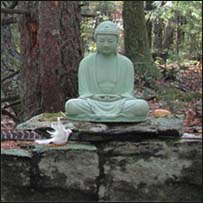
Referring to the text, see what’s not there – there’s no mention of one-pointed attention. This is a common misunderstanding. Consider instead a one-pointed intention, to bear in mind, and return again and again to the process of breathing.
From my teacher Thea Elijah, through establishing our connection to the earth, we create common ground upon which we realize our interconnectedness. This meditation guides us through this process so that we can offer lovingkindness to ourselves, a beloved, a neutral person, a difficult person, and all beings.
When standing we don’t stand stiff, but fluid. Balanced posture and alignment allow muscles to release so energy can move through the form in a supportive way. Over time we become supported by the body’s energy rather than its muscles.
How to peel off the layers of saṅkhāra? Do with an intent to undo. Although we unconsciously give energy to our hindrances and programs, if we withdraw energy and interest, they wither. This is right effort. When citta is cleared of hindrances and is no longer pulled out into the abstract, it gains its own strength and you can trust it.
Fabricated formations, such as clock time, are useful for some things but not for liberation. Use the ritual of puja to transcend circumstantial reality; recognize there is a place in citta to stand outside of self – in faith and devotion. The belief that an end to suffering is possible is the initiator of Dhamma practice. Where there is no faith there is no practice.
What is the body? Not the picture of it but the direct experience of it. Referring to instructions given in the Ānāpānasati Sutta, guidance is given to directly experience the body in its diverse manifestations of energy, feeling and sensation. Breathing in, breathing out, allow the process to occur at its own rate and stay with what’s unfolding for you.
Dhamma practice is the channel for direct experience: that which is entered through the door of feeling. This is not the ‘mental’ knowing: the somatic sense responds to feeling. Your place of practice is this direct ‘feeling-knowing’ – pājānati – through mindfulness of the body.
A guided meditation to fully feel the body, filling out the length, width and thickness of the entire bodily form. This upright yet relaxed posture is firm and allows energy to freely flow.