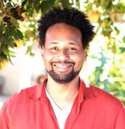
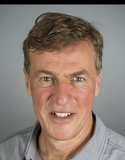
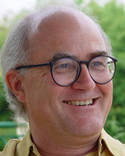
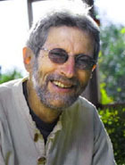
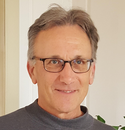
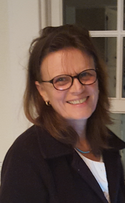
Rev. Shinmu Tamori Gibson (心無 田守 ギブソン) (fka Jozen) lives to study, nourish, and offer contemplative heart-body-mind practices and spaces rooted in compassionate wellness, anti-oppression and interdependent liberation for all beings through the Buddhadharma.
Shinmu is a Sotō Zen monastic priest ordained on November 12, 2023 by their teacher, Osho Zenju Earthlyn Manuel of the Suzuki Roshi lineage. Honoring the wisdom and compassion of all teachers and future generations, with the ancestors of their Black Japanese heritage, Shinmu highlights their mother – Akimi, and their lay dharma teacher – Monitsu Pamela Weiss.
They began formal meditation practice while living in Japan, joined by Early Buddhism, Theravada practice centering Vipassana and Thai Forest lineages. Shinmu is a graduate of the four-year Insight Meditation Society (IMS) – Insight Retreat Center (IRC) Dharma Teacher Training program. Certifications and embodiment studies in Yoga, Qigong, psychology and emergency medicines supplements the fluidity of this life and clarification of the ennobling truths.
Sky Dawson has practiced vipassana meditation since 1981, and also has extensive experience in hospice and palliative care in Western Australia. She has taught at IMS for several years and is now the Teacher-in-Residence at IMS's Forest Refuge.
Solwazi has been practicing and teaching for over 20 years with a focus on Vipassana since 2003. He has studied/practiced in Thailand, Burma, India, and South Africa. He is certified as a Community Dharma Leader by Jack Kornfield and Spirit Rock Meditation Center and is currently in the four-year Spirit Rock Teacher Training Program. Solwazi worked for over 20 years as a health educator and trainer for the Colorado Department of Public Health and Environment and the U.S. Centers for Disease Control. He leads mindfulness meditation classes and retreats in the Denver metropolitan area. He is an ICF certified professional coach and a graduate of the Rolf Institute of Structural Integration and the Thai School of Complementary Health in Chaing Mai, Thailand. Lastly, Solwazi is the guiding teacher for a Prison Buddhist Ministry Program in a Federal Prison located in Englewood, Colorado.
Spring Washam is a well-known meditation teacher, author and visionary leader based in Oakland, California. She is the author of A Fierce Heart: Finding Strength, Courage, and Wisdom in Any Moment. Spring is considered a pioneer in bringing mindfulness-based healing practices to diverse communities. She is one of the founders and core teachers at the East Bay Meditation Center, located in downtown Oakland, CA. She is also the co-founder of a new organization called Communities Rizing, which is dedicated to providing yoga and meditation teacher training programs for communities of color. She received extensive training by Jack Kornfield, is a member of the teacher's council at Spirit Rock Meditation Center in northern California, and has practiced and studied Buddhist philosophy in both the Theravada and Tibetan schools of Buddhism for the last 20 years. In addition to being a teacher, she is also a shamanic practitioner and has studied indigenous healing practices for over a decade. She is the founder of Lotus Vine Journeys, an organization that blends indigenous healing practices with Buddhist wisdom. Her writing and teachings have appeared in many online journals and publications such as Lions Roar, Tricycle, and Belief.net. She has been a guest on many popular podcasts and radio shows. She currently travels and teaches meditation retreats, workshops and classes worldwide. In addition to being a teacher she also considers herself a healer, burgeoning writer, facilitator and spiritual activist. Spring has studied indigenous healing practices and works with students individually from around the world. She currently teaches workshops, large groups, compassion meditation and loving kindness retreats throughout the country. Her work includes earth based practices, awakening in the body, movement, dance and yoga.
Stefan Lang has been practicing with asian and western Dharma teachers since 1983. He is on the board of Zentrum für Buddhismus, a multi-tradition Buddhist city center, and Vipassana Meditationsgruppe Bern (both in Bern, Switzerland). His main interest concerns a Dharma practice suited for today's society.
Dr. Stephen Fulder was born in the UK and received an M.A. from Oxford University and a Ph.D. He has devoted his life to exploring inner and outer healing and spirituality. He is an author and lecturer in herbal and natural medicine with 14 published books. He lives in an environmental village in the Galilee in Israel, which he helped to found and where he grows his own food. Stephen has been practicing Vipassana meditation since 1975, is the founder and senior teacher of the Israel Insight Society, the main Vipassana/Mindfulness organization in Israel, and has been teaching retreats and courses in Buddhist practice for 15 years. He has established programs and organizations, such as ‘Middleway’, which apply these teachings to aid peace and healing in the communities in the Middle East.
Stephen Doetsu Snyder began practicing daily meditation in 1976. Since then, he has studied Buddhism extensively—investigating and engaging in Zen, Tibetan, Theravada, and Western non-dual traditions. He was authorized to teach in the Theravada Buddhist tradition in 2007 and the Zen Buddhist schools of Soto and Rinzai in 2022. Stephen is a senior student of Roshi Mark Sando Mininberg.
Stephen’s resonant and warmhearted teaching style engages students around the globe through in-person and online retreats, as well as one-on-one coaching. He encourages students to turn toward their true nature and, with realization of their true nature, embody their true identity. Stephen is the author of four books, including Trust in Awakening, Demystifying Awakening and Buddha’s Heart. He also co-authored Practicing the Jhānas.
My biding motivation for the practice of teaching is to share my interest, my understanding and my confidence in the Buddha's way for a balanced and deeply happy life. Given the pace of our culture and the direction in which it is going, mindfulness is essential to sanity. Since my first vipassana retreat in 1975, I've experienced the wisdom of sanity, peace and freedom.
Now, the challenge in sharing the dhamma is to translate the Buddha's understanding into an idiom that speaks to the whole of our lives. As practice matures, the focus in guiding others shifts from informing the skeptic, inspiring the depressed and doubtful, soothing the suffering, energizing the lazy, cautioning the ambitious to discovering the subtler sources of suffering and happiness in our understanding and behavior. With deepening vipassana insight, students joyfully and confidently disentangle their minds.
In all of this, what sustains me as a teacher is the unwavering confidence that mindfulness is the source of our healing, sanity and freedom. Vipassana practice offers us a perspective on reality that is liberating, both personally and at every level of human interaction. Initially, my unwavering commitment was to the practice. Now my commitment includes service in sharing the dhamma and wherever possible informing, inspiring and encouraging others in the practice.
The millennium question I hear students asking is how they can integrate the path of self-liberation with the path of paying attention to the welfare of others. My focus is guiding practitioners to do both. The dharmic brilliance is that liberation, the core teaching, creates a deep, transformative experience of who we are, which, in turn, transforms our care for the state of all beings everywhere.
I love storytelling as a vehicle for the dharma. I find that creating a non-ordinary reality of time and place carries the Buddhist spirit beneath the intellect and straight into the heart. Since we are all on a mythic journey inside the story of our lives, creating a timeless dimension through storytelling fires up our natural wisdom and compassion.
One of my deepest passions is engaging with an earth dharma. Dharmic awareness gives us a way to create a profound relationship to the land. We can learn to show care, honor and respect, loving the environment as the true extension of our hearts and minds that it is, feeling one with it in our blood.
People all over are seeking and longing for a sense of connection, community and an inner life. When we fuse the traditions of the dharma as self-liberation and as compassionate action, we infuse our daily lives with the power of the ancient lineage of Buddhism. We learn about the true nature of who we are and what it means to lead a compassionate life with ourselves, with others and our environment.
Sumedha (Hannah Bagshaw) became interested in spiritual practice in her teens and, after studying Comparative Religion at university, practiced as a nun in the Forest Tradition of Ajahn Chah, based in the UK and for a short time in the US. After disrobing in 2010 she co-founded Ekuthuleni retreat place in France with Noon Baldwin, bringing together ecology, simple living and meditation. She is passionate about how we can reconnect with our deeper being through learning from nature itself - and how we bring that depth back into the world, in how we live and care about each other and the planet.
Susan O'Brien has been practicing vipassana meditation since 1980 and has studied with a variety of Asian and Western teachers. She began teaching in 1996 and coordinates the Insight Meditation correspondence course.
Susie Harrington has been meditating since 1989, and been engaged in Insight meditation practice since 1995. She began teaching in 2005, with the guidance of Guy Armstrong, Jack Kornfield and more recently Joseph Goldstein. She often offers retreats in the natural world, believing nature to be the most profound dharma teacher, and a natural gateway to our true self. Her teaching is deeply grounded in the body and emphasizes embodiment of our practice in speech and daily life. For more information go to desertdharma.org.
Suvaco is a former Buddhist monk and a passionate advocate for embodying life in all of its forms. He lives in the South West United Kingdom where he works as a psychotherapist and Tai Qi teacher.
My greatest joy is giving the gift of love and hope through the dharma, knowing it is possible for humans to transform their hearts. These dharma gifts include paying attention, practicing clarity and kindness and addressing the suffering of the world--which, of course, includes ourselves.
Right now I'm most enthusiastic about the first gift, paying attention, because it makes every part of our lives better. Paying attention allows us to become more clear, and each moment of clarity is a gift to ourselves and those around us. Clarity keeps us from contributing to more suffering. The gift of clarity and kindness also supports a peaceful heart, which allows us to address the suffering in the world with love. When we practice clarity, we offer the possibility for humans to live in a different way. But a peaceful heart is only the beginning. We also have to take action, go out and directly address the suffering with peace in our hearts.
As a parent, grandparent and a psychotherapist, I teach out of the stories of my life and the lives of those around me. I am especially touched by personal narrative, accounts of spiritual journeys, and how these become vehicles for connecting with the dharma. I believe in revealing my own story so that others are more at ease to reveal theirs. Truth talking is a way out of suffering. Discovering how our hearts and minds work and creating a dialogue supports right speech practice. This is an on-going primary practice that we can do all the time. My hope is that I encourage people how to pay attention and to tell the truth by example.
Tanya Wiser, LCSW SEP, teaches at the Insight Meditation Center in Redwood City, CA. She works full-time as a mindfulness-based therapist, integrating her mindfulness, compassion, and somatic therapy training with insights from direct engagement with Buddhist teachings. Tanya draws from the teachings of her Western Theravada teachers, Gil Fronsdal and Andrea Fella, as well as Jack Kornfield, Tara Brach, and the Burmese Monk Sayadaw U Tejaniya. As a white, queer mother and lay practitioner, she enjoys fostering a sense of sangha (spiritual community) within a relational framework of spiritual friendship, all while living a householder’s life guided by a commitment to liberation.
A pervasive but often invisible source of suffering in our culture is self-aversion. We are a busy culture, and we move through our life feeling anxious and dissatisfied, but not fully conscious of how we neglect or judge our inner experience. We suffer from a lack of belonging: to our own bodies, to each other and to the earth. When we practice Buddhist meditation, we learn how to listen deeply and hold our life tenderly.
The open space of compassion allows us to realize that our thoughts and emotions are not who we are; they are waves in our ocean. This gives us the freedom to live more wisely and love more fully.
For over thirty-five years, I've been exploring the awakening of awareness with yoga, meditation, a clinical psychology practice and relationships in spiritual community (sangha). Since the untying of emotional knots is an essential part of "waking up," it is natural for me to weave these elements into my Buddhist practice and teaching. With formal practice, and a genuine engagement in sangha, we can cultivate the qualities of heart and awareness that allow for deep emotional healing and spiritual freedom.
Buddhism guides us in slowing down, quieting and paying attention in an honest and caring way. Through our mindfulness and compassion practices, we establish a sense of intimacy and belonging to our life. We discover that there is no Buddha "out there." Rather, we realize that our true refuge is the wakefulness, openness and love of our own natural awareness.
Teja Bell (Fudo Myoo Roshi) is a lineage dharma teacher and Rinzai Zen master, the 85th ancestor of the lineage of Lin-Chi I-Chuan. He teaches dharma and qigong as embodied mindfulness through integrating somatic skills with meditation practices.
Tempel Smith spent a year ordained as a monk in Burma and teaches Buddhist psychology and social activism in the San Francisco Bay Area. He is currently part of the IMS/Spirit Rock Teacher Training Program.
Tere is second generation Mexican, with a Lebanese family background. She was born and lived in Mexico City almost all her life. There she became fascinated by Tibetan Buddhism. She moved to Los Angeles in 2002 with her now late husband and three young daughters. Once in LA, she met Trudy Goodman at InsightLA and decided to leave behind her Business career and interest in Geography to devote herself to her family, her personal growth, and the study and practice of Buddhism to enhance her life and the lives of others around her. In LA, Tere became a passionate painter. Her mindfulness journey has strengthened her creativity as a visual artist. She is currently the president of a large growing and successful multinational company in Mexico City and a firm believer of the enormous benefits of mindfulness everywhere. Her heart calls her to share the Dharma with Spanish Speaking communities. She facilitates mindfulness groups in both Spanish and English.
Thanissara, from London, was a monastic for 12 years in the tradition of Ajahn Chah and has taught internationally for over 35 years. She is co-founder of Dharmagiri Sacred Mountain Retreat, South Africa, Sacred Mountain Sangha, California, and Chattanooga Insight, Tennessee. She has an MA in Mindfulness Psychotherapy Practice from the Karuna Institute UK and is co-author of Listening to the Heart, A Contemplative Guide to Engaged Buddhism, author of Time To Stand Up, An Engaged Buddhist Manifesto for Our Earth, and several books of poetry.
Tim Geil began practicing Insight Meditation in 1996 and completed the four-year Residential Retreat Teacher Training through Spirit Rock, Insight Meditation Society, and Insight Retreat Center in 2016. Tim has been a co-guiding teacher of Seattle Insight since 2015 and offers retreats at Cloud Mountain Retreat Center.